It is all around us, it talks to us and we barely even know what it is. It pushes and pulls our emotions makes us feel anxious or happy, guides our path in life and still goes unnoticed. The applied knowledge of the Magi people, vulgarly known as witchcraft, has to do with the power of using the mind to make come to reality what we want the most. Such knowledge is commonly associated with women, the beautiful kind in particular, for there is almost nothing a beautiful woman cannot get in this world. The path from object of beauty to object of desire for these creatures is almost always guaranteed, after been desired the path to becoming a Wiccan requires mental development nonetheless; once a Wiccan becomes a “wishful thought” of men the exchange for wishes comes naturally……………………………………………………………………………………………………………………………………………………………………………..For the most part, men are able to create, conquer and master anything they put their mind into, for wherever there is a will there is a how. Throughout the ages wars have been fought and despicable creatures have been killed for the recognition and grace of beautiful women. After becoming familiarized with the dynamics of men and women that date back to ancient times, some Wiccans became aware of their feminine enchantments and capitalized on them. The art of granting or obtaining wishes is not only about looks, there are many techniques and tricks to the trait that require training, practice and acting skills only mastered with time. Some female Wiccans get mastery through their own experiences, others associate with a mentor or a small group of individuals with similar objectives. Been associated with a group and acting as a unit, turns out to be very effective for the casting of spells and creating illusions, for the mind of the targeted individual will mostly believe reality to be a consensus of the perception from the minds around him.
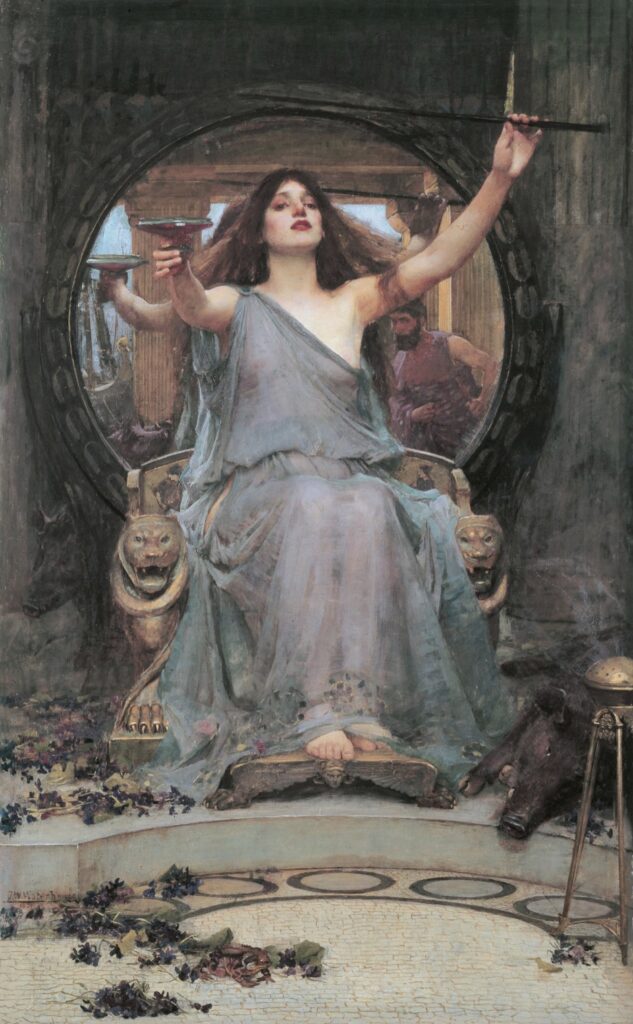
The Most Magical Encounter…
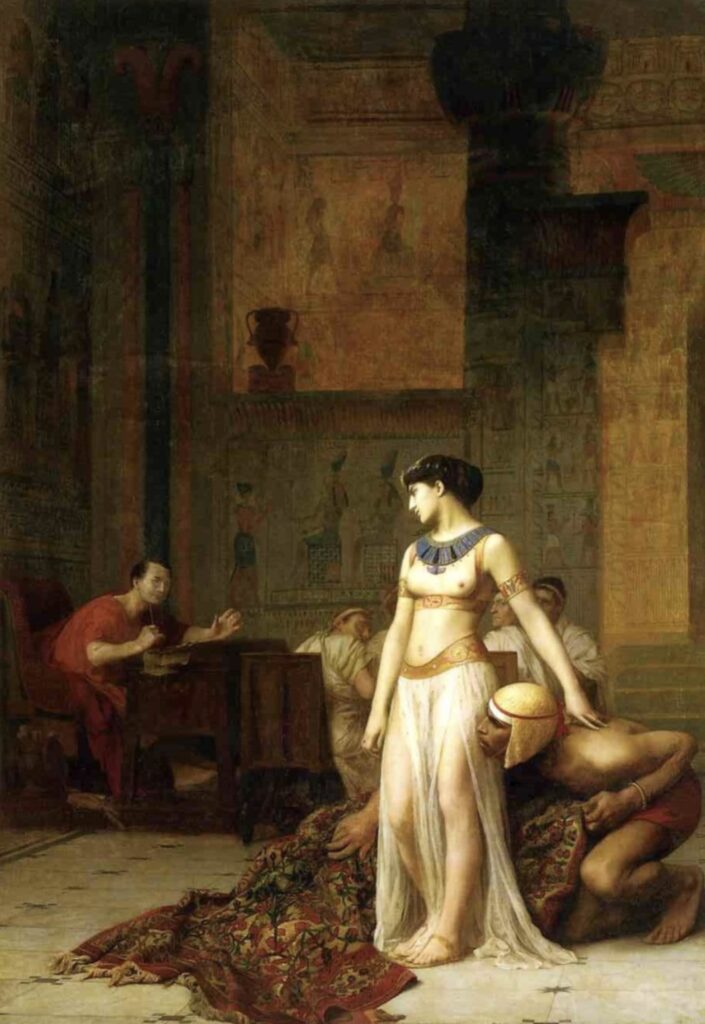
One of the first well documented cases with elements of witchcraft was when Cleopatra met Julius Caesar…
She sneaked into the Palace of Alexandria, where Caesar was in at the time, using a “magic carpet”. When the carpet was unrolled she presented herself before Caesar with a Goddess-like appearance. Her lips were as red as a wine, her skin seemed an invitation for touch, her kohl eyes accentuated her mighty gaze, and her dilated pupils made her stare even more dazzling.
She seduced Caesar, got his support and eventually was restored to the throne of Egypt. But there is more than meets the eye about this encounter. Not a single detail about this meeting was left for chance; the technique, the element of surprise and the air of mysticism, were perfectly executed to create an effect and grant her the wish of becoming the supreme leader of Egypt.
At the time this rendez-vous took place, Caesar was 52 and already married, he was spending time in Egypt to handle the ongoing Roman civil war. Cleopatra was taking refuge in Syria after been exiled from Egypt by her brother. During Caesar’s presence in the Palace of Alexandria, she sought an opportunity to get support from the most powerful man in the west for her enterprise. The carpet was used to conceal her body until the final moment, the red lips were crafted from carmine, a red pigment derived from cochineal insects. The dilated pupils effect was achieved by the use of extracts from the Egyptian henbane plant which contains the drug atropine; and the kohl look in her eyes made her appearance even more alluring.
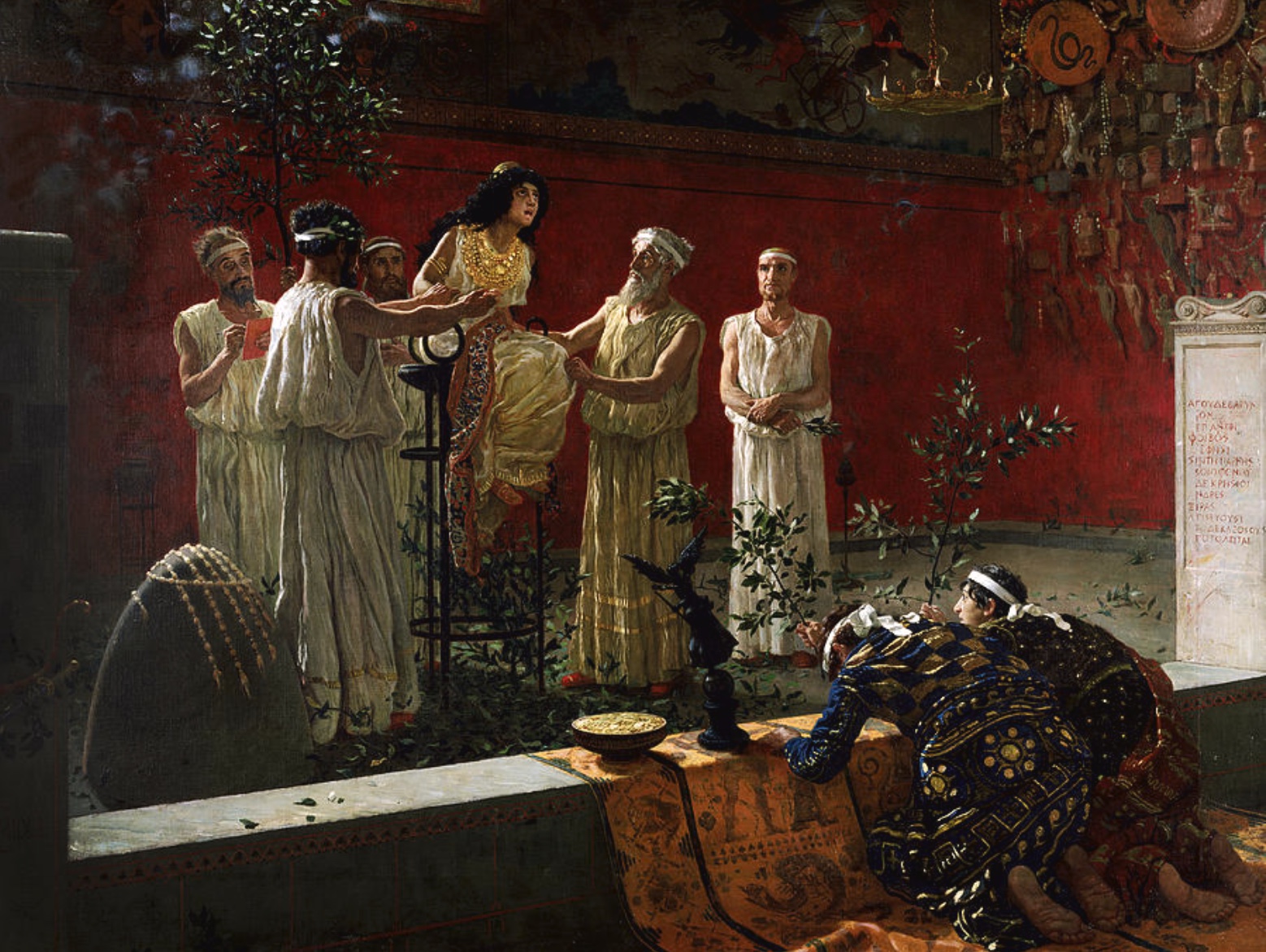
The Craft of Granting Wishes was an Ordinary Practice in Egypt
“The role was usually carried out by shrines acting as intermediaries between humans and the gods“. Clients of these shrines would usually request foresight of their future or material possessions to better their life. In both scenarios the sorcerer was actually a source of information.
For divination the Wiccan relied on logic, common knowledge, statistics and advices using phrases of wisdom to be interpreted in a personal manner only by the client. For tangible things the craft master -being a trafficker of information- would let the client know where and how to source any material that turned into the object of their obsession.
Throughout history various shrines and oracles were consulted by warlords to seek guidance, boost morale and predict outcomes in battle.
The sanctuary of Apollo in Delphi was perhaps the most crucial site for consulting during war times. Greek city-states and foreign leaders would send heralds to ask the priestess Pythia for guidance before initiating military campaigns or founding colonies.
The famous Phrase “Know Thyself”, inscribed at the entrance of the Temple of Apollo, may not have only served as an advice but also as a way to limit the amount of inquiries that clients had. The Oracle of Delphi had a high volume of visitors during a single day. Thousands of people traveled from across the mediterranean to consult the oracle on matters of state and personal life dilemmas for the most part. Knowing oneself, looking for answers by analyzing one’s own character, and how certain life situations may play out, gives us vision on possible outcomes. -If you know you cannot run too far and you happen to be in Athens, running to Marathon would be a mistake as you would become exhausted mid-way-.
Knowing the strength of one’s character, tolerance levels and capabilities can be used as a compass for happiness and sometimes even safe one’s own life. People with this knowledge will seldom times have the need to visit an oracle.
Special thanks to the artists and their masterpieces: “Circe Offering the cup to Ulyses” 1891 by John William Waterhouse. “Cleopatra and Caesar” 1866 by Jean-Leon Gerome. “The Oracle at Delphi” 1880 by Camilo Miola.